Original Cabinets, Brand-New Life: a Taylors Kitchen & Breakfast Room
- Location
- Taylors, SC
- Services
- Cabinet & Interior Painting
- Scope
- Full kitchen cabinets · breakfast room
- Products
- SW shellac primer · Gallery · ProBlock · Cashmere
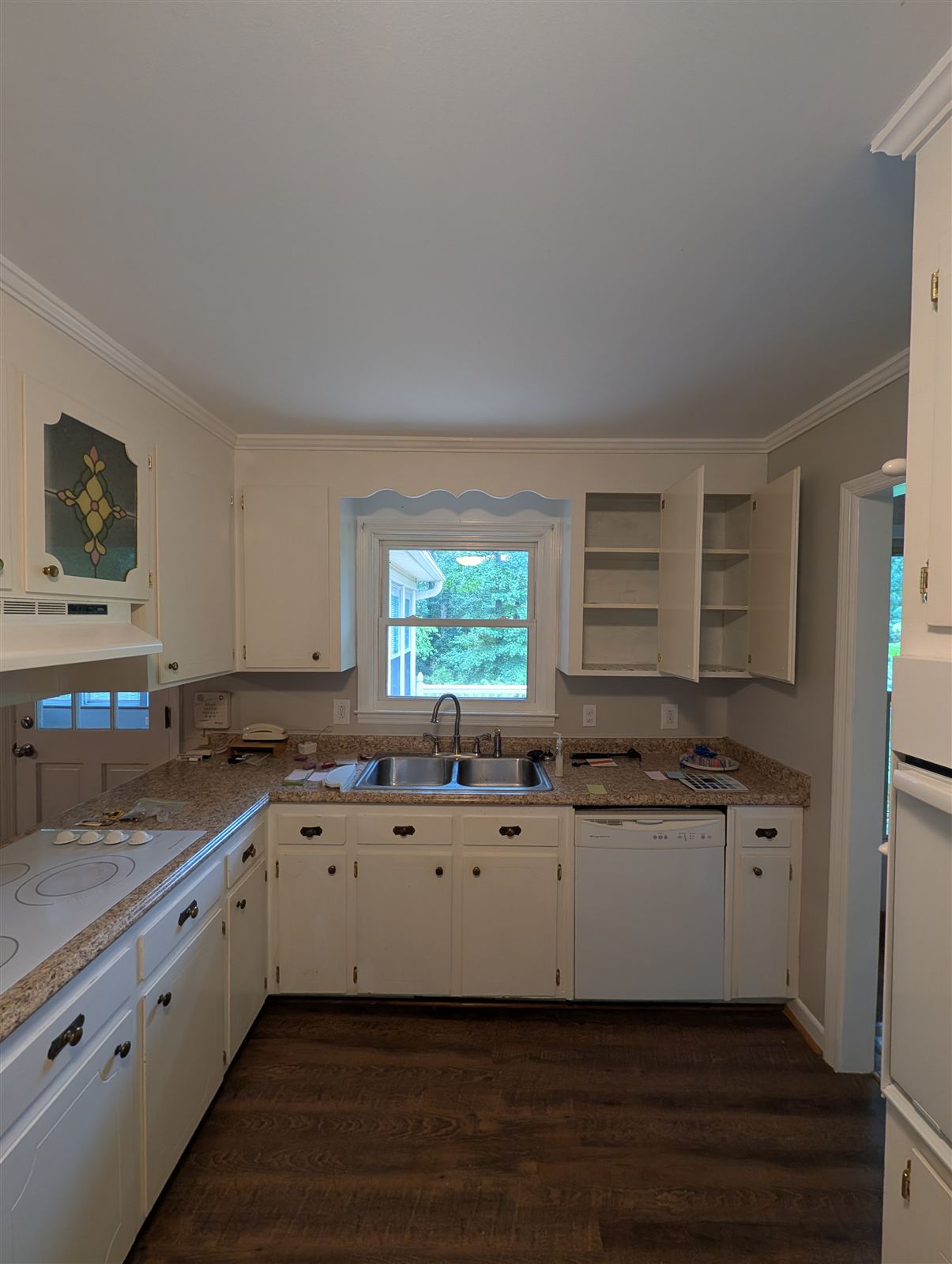
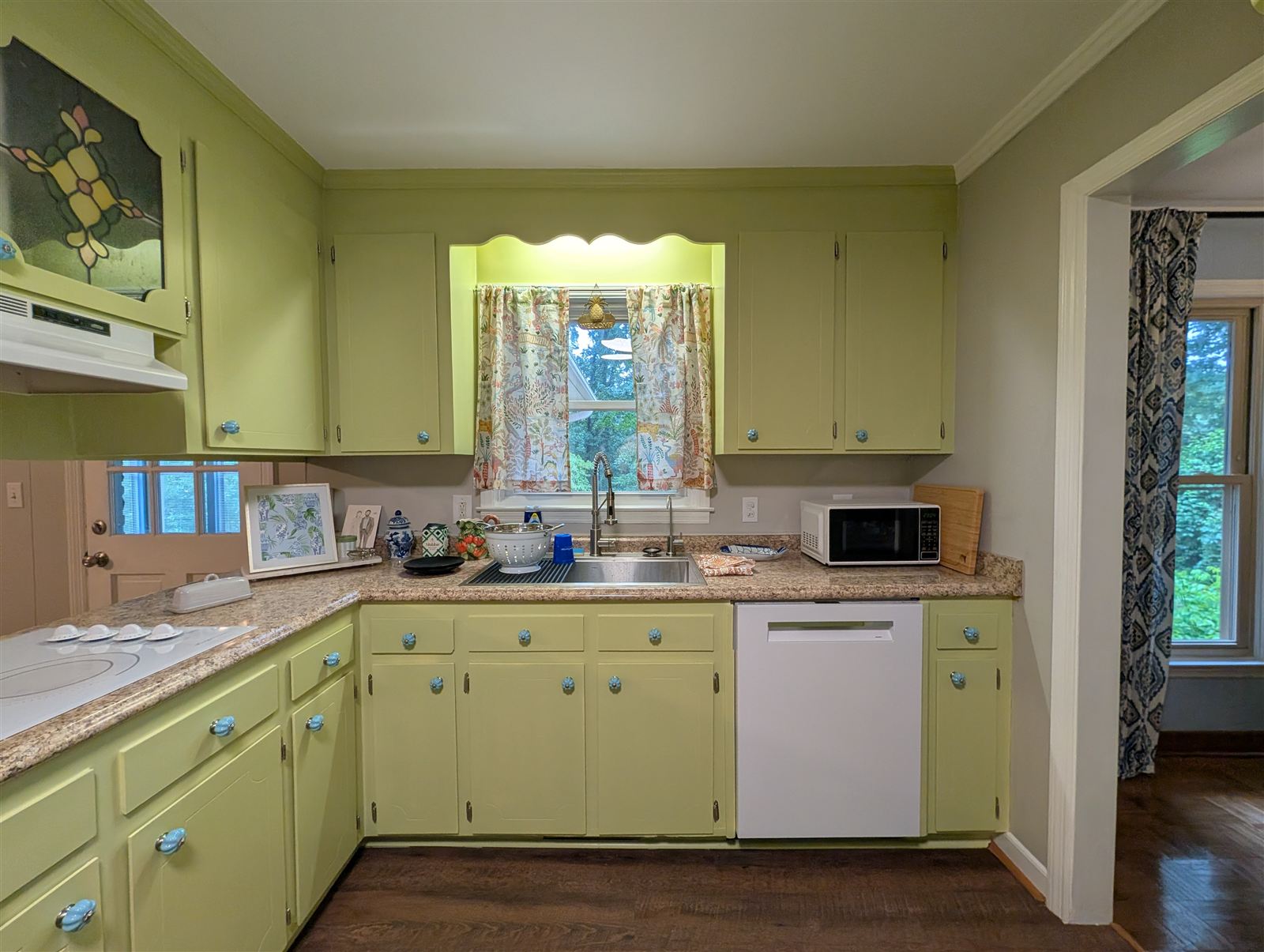
These cabinets came with the house — and they'd been painted many times over the years, always with a brush. The homeowners liked their cabinets; they just couldn't like the dingy white, the chipping paint, and the brush strokes you could read from across the room. Our job: keep the cabinets they loved and take the finish somewhere it had never been.
Cabinets Worth Keeping
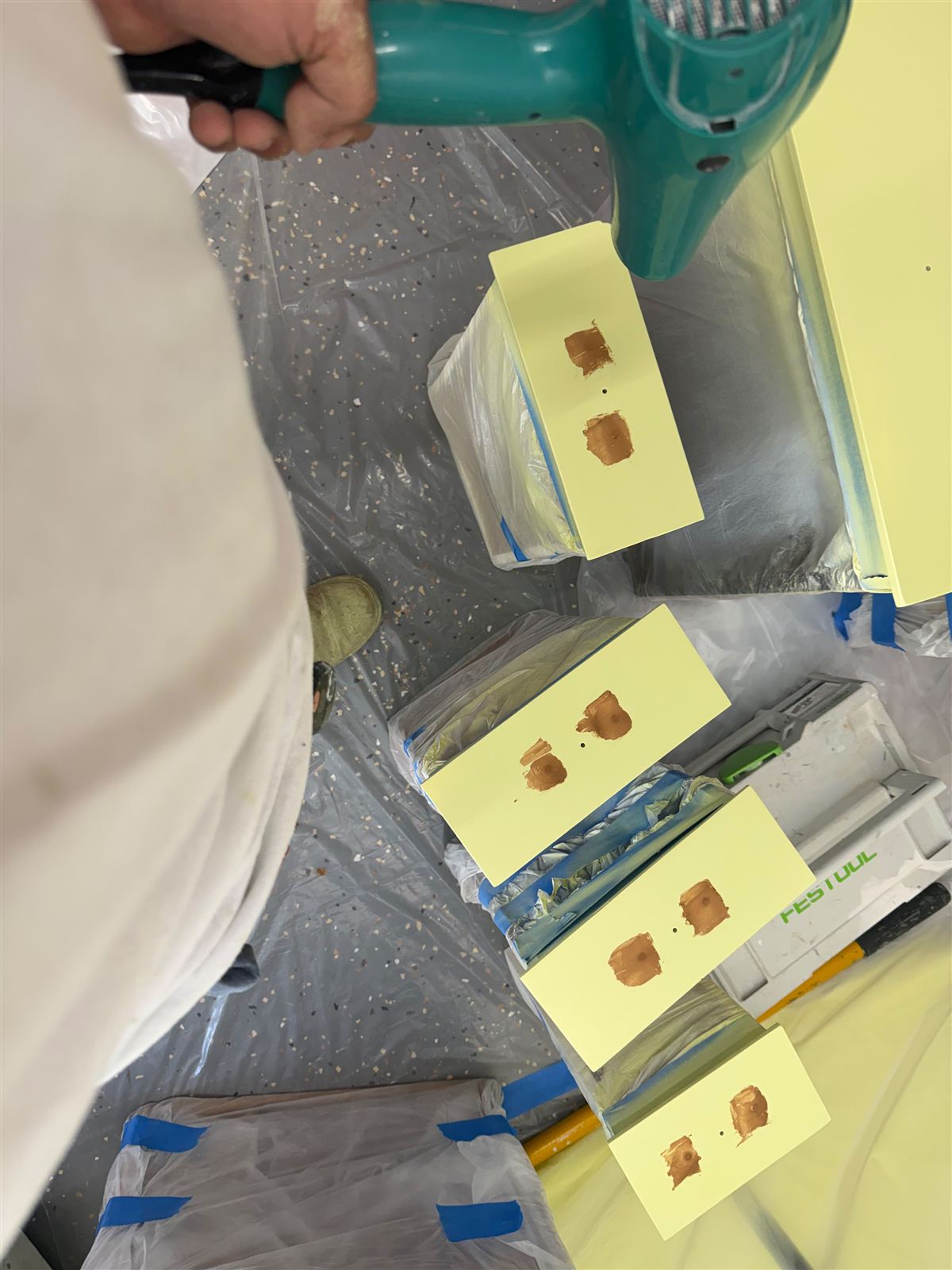
Original cabinets with layers of brushed-on paint are a specific starting point: every coat added texture, and the last one was chipping on top of it. We removed every door and drawer, stripped away the failing paint, and sanded the whole kitchen back to a genuinely smooth surface — because a sprayed finish is only as smooth as what's underneath it. Where the old hardware had been, we filled the holes so the new knobs could land exactly where they should.
Wrapped Tight Before a Drop of Paint
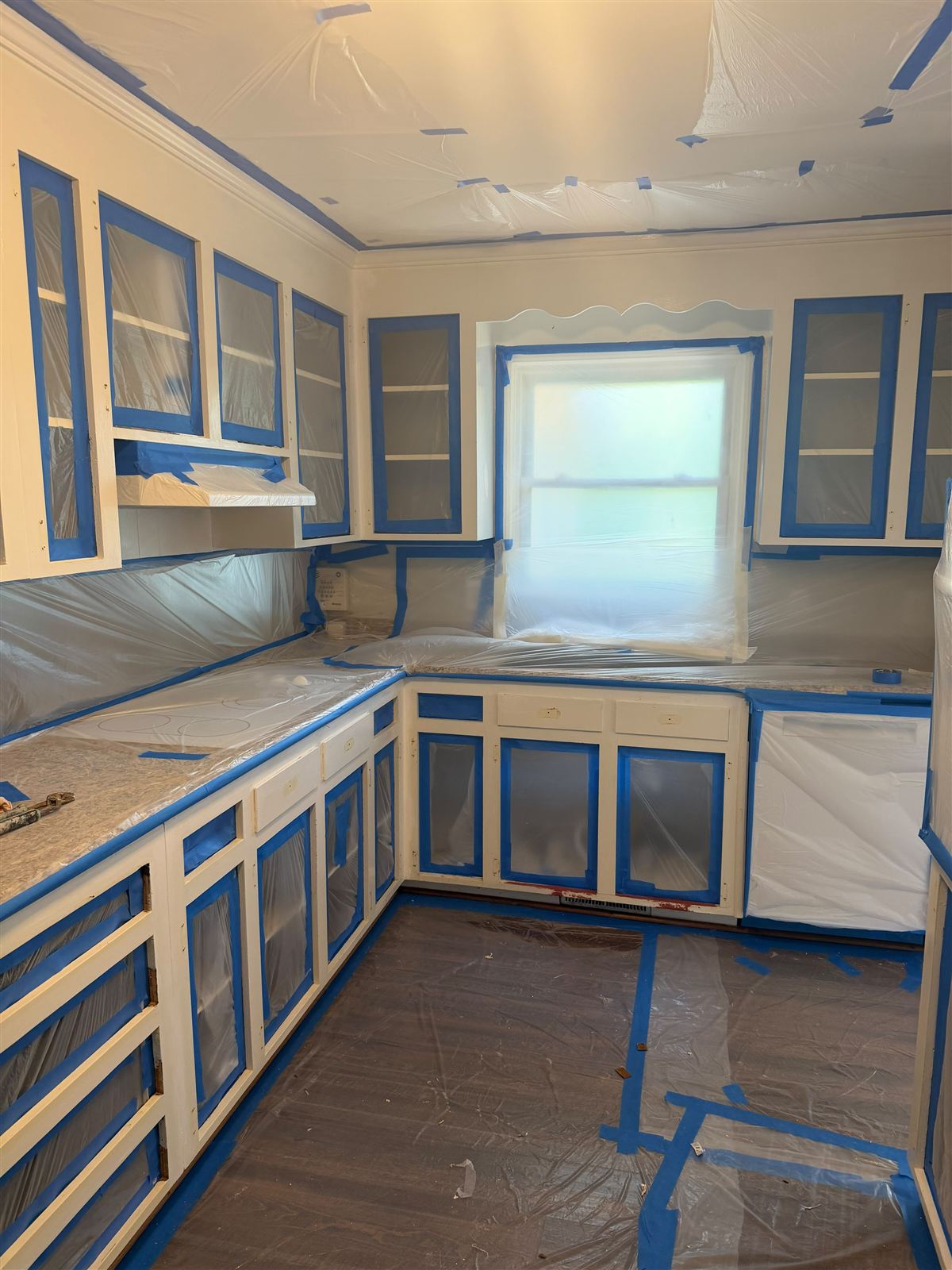
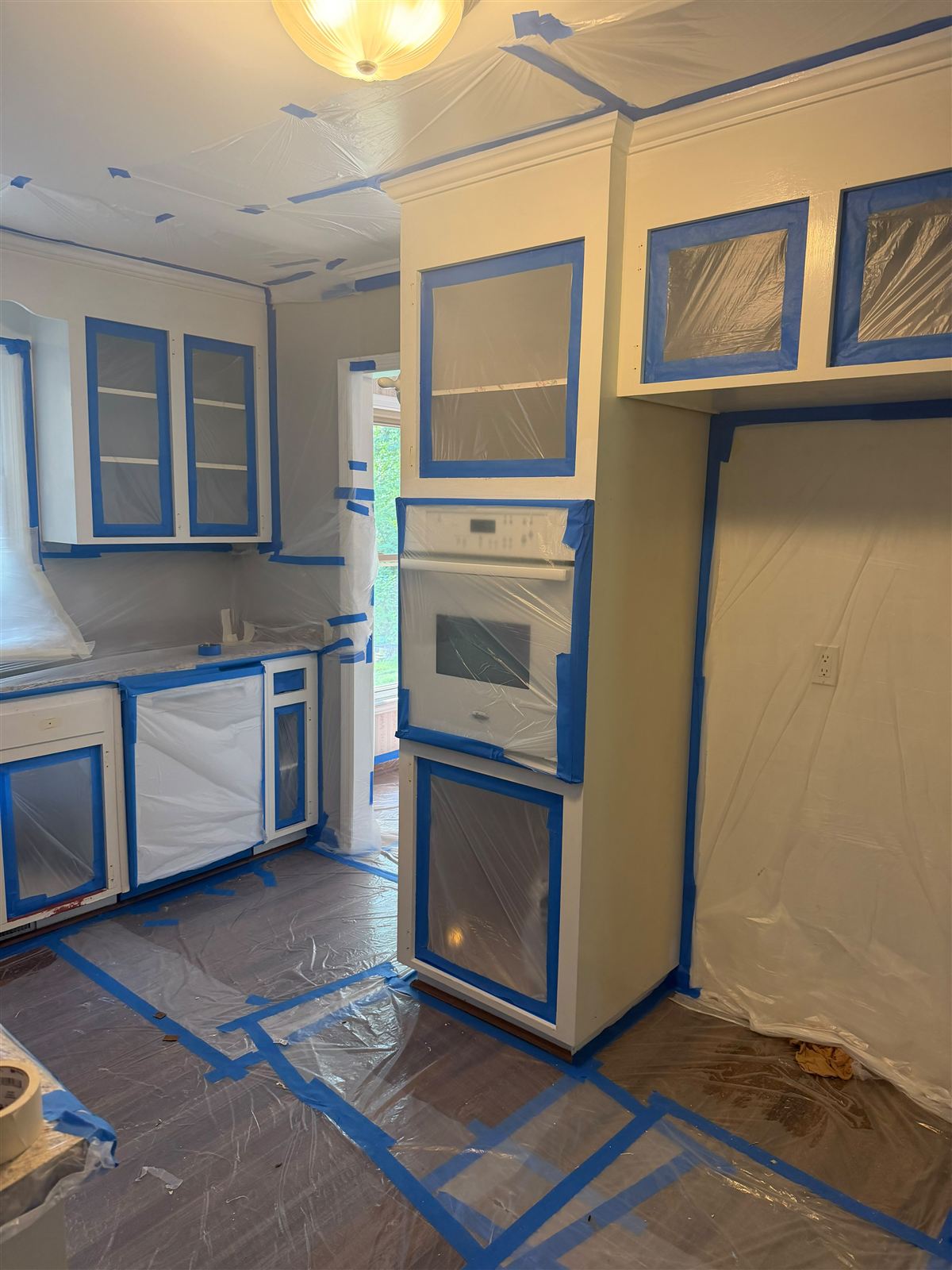
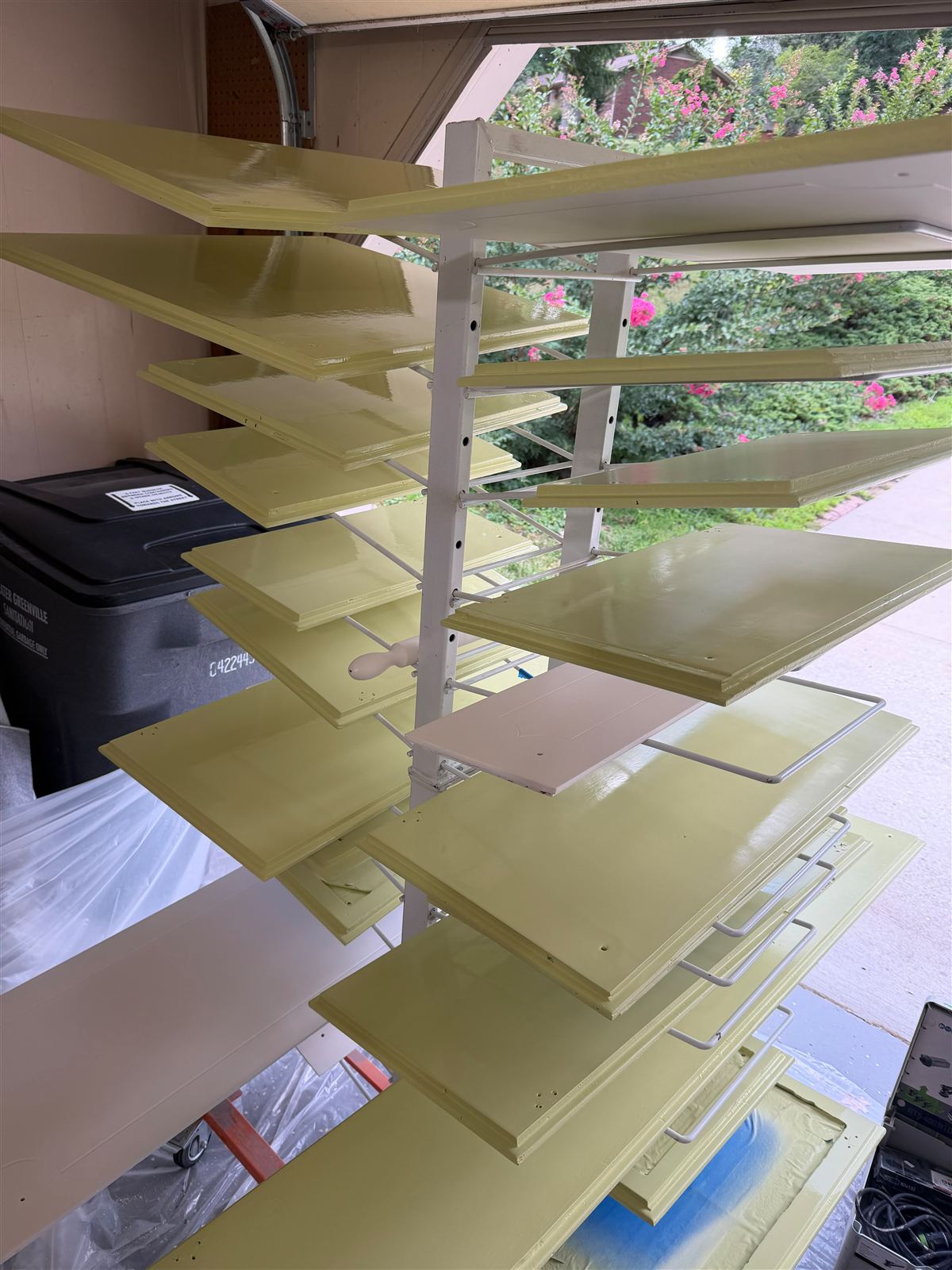
Spraying inside a kitchen means protection comes first. We masked the room down to the tape lines — ceiling, walls, countertops, window, floors, and every appliance sealed in plastic — so the only surfaces that could take paint were the ones meant to. The doors and drawers left the kitchen entirely and were sprayed on drying racks, where each piece could take its coats laid flat and dust-free.
Shellac Primer, Then the Color
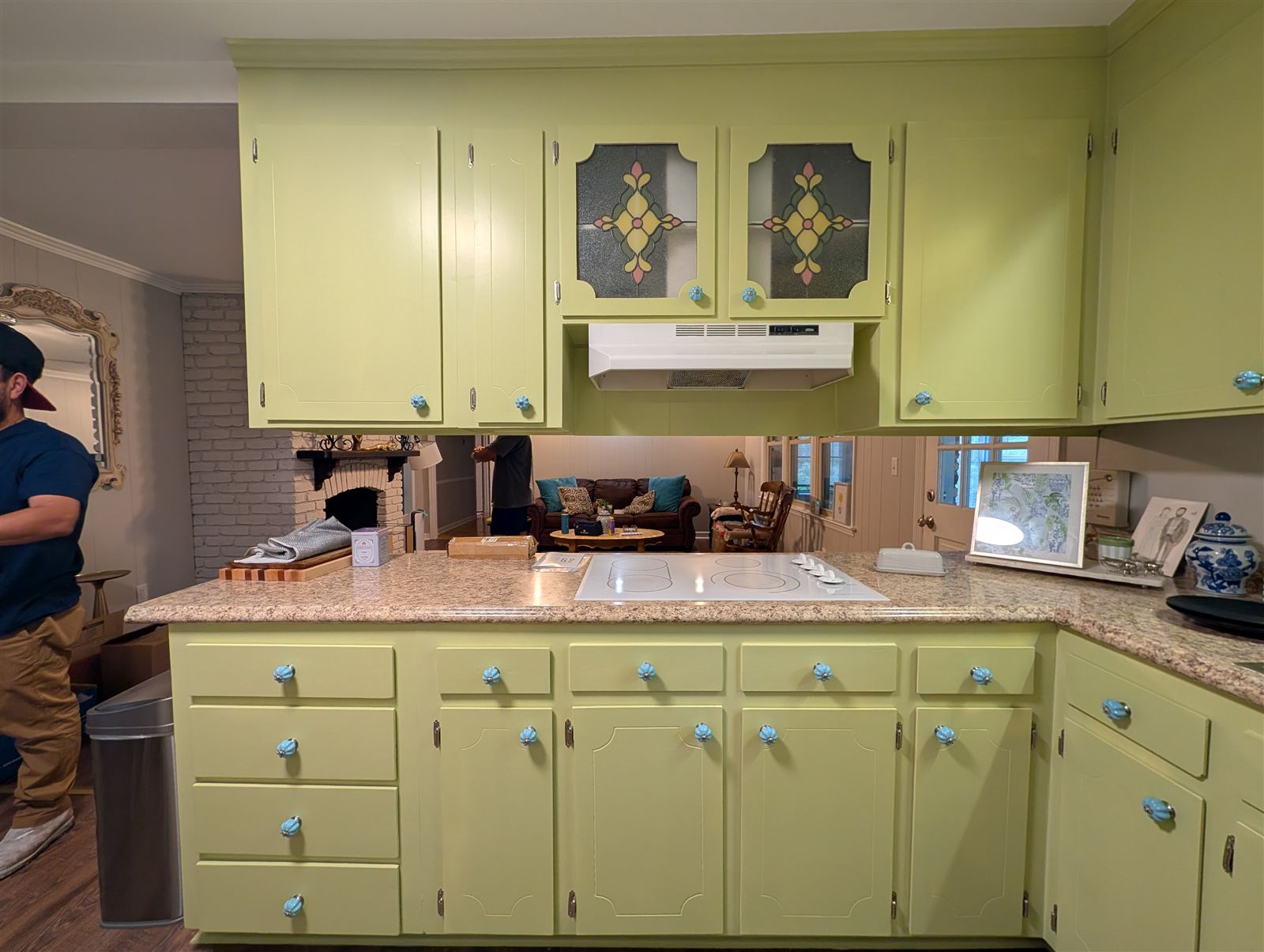
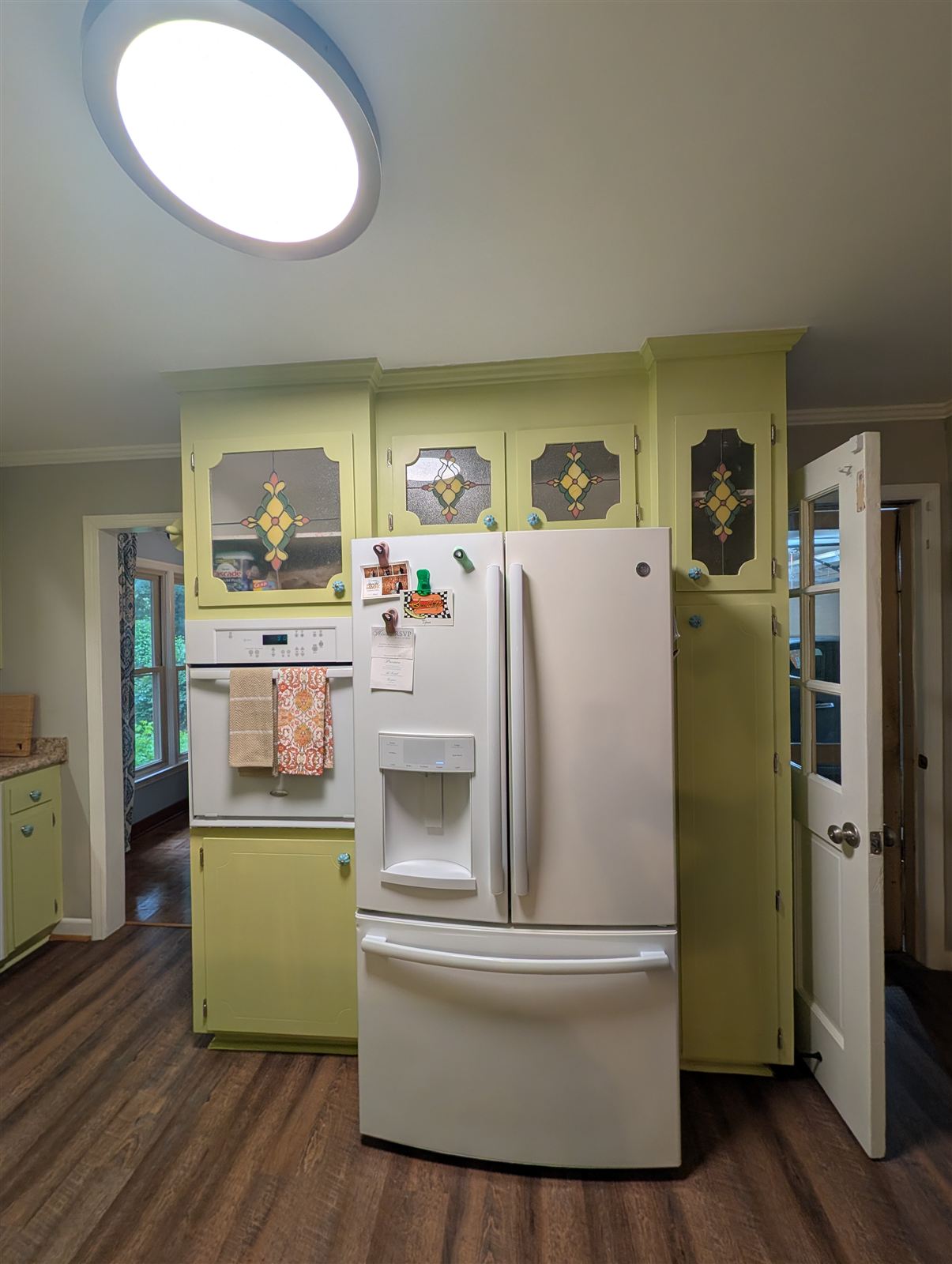
Over old, many-times-painted wood, the primer decides whether the new finish lasts. We primed everything with Sherwin-Williams white pigmented shellac primer — the coating that locks down old layers, seals stains, and gives new paint something it can truly bond to. Then two sprayed coats of Sherwin-Williams Gallery in the soft green the homeowners chose, and new hardware in a bright pop of color that shows the whole kitchen off — down to the stained-glass doors that make these cabinets one of a kind.
The Wallpaper Problem, Solved Without Removing It
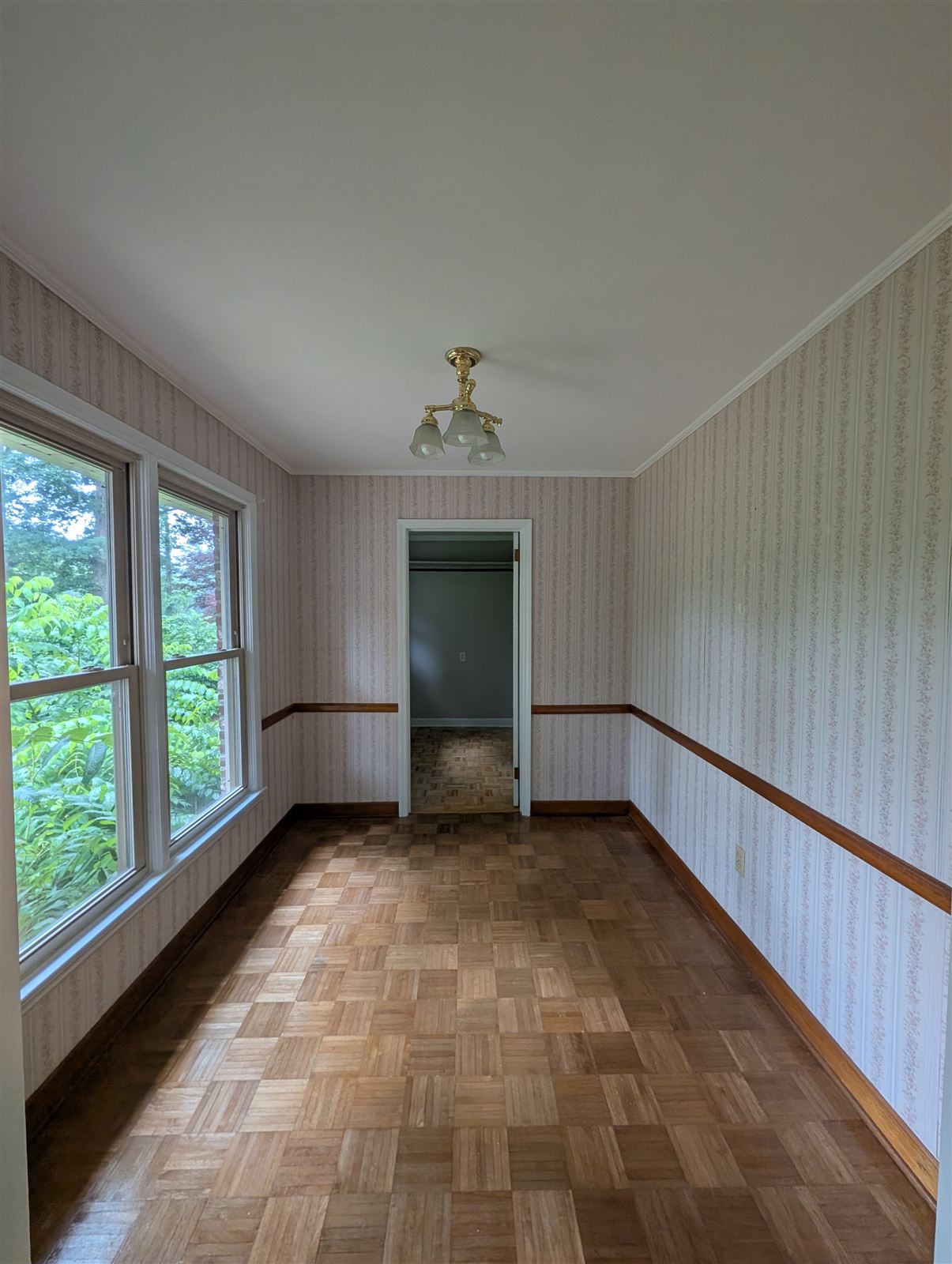
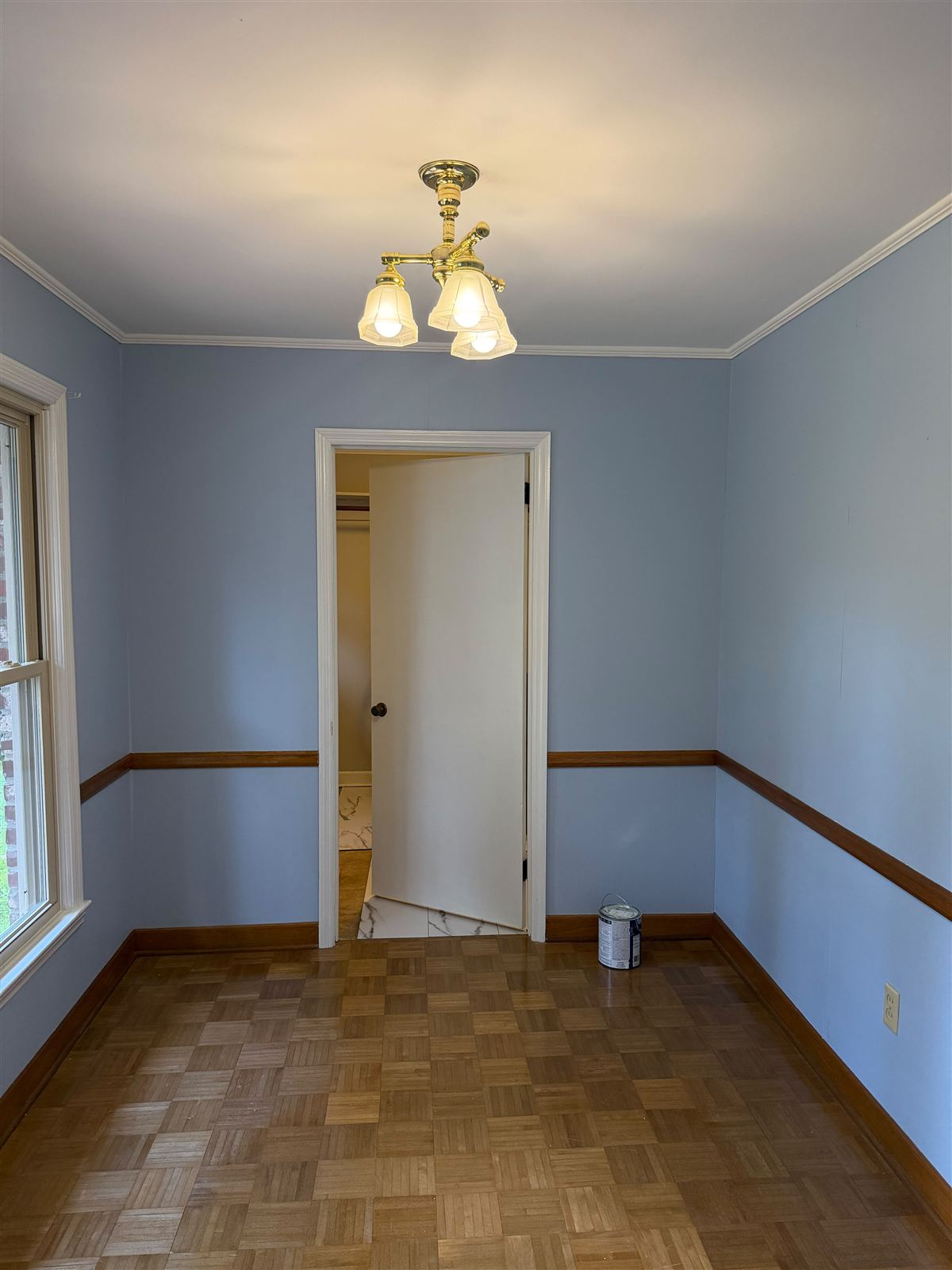
Right off the kitchen sat a room wrapped in old wallpaper — and under the wallpaper, old paneling. Stripping the paper off that paneling would have been a fight, and the honest fix after it — new sheetrock — means pulling the chair rail, base moldings, and window trim, then extending every window and door jamb to make up for the added thickness. A whole carpentry project to earn a paint job. So we solved it a smarter way: we primed straight over the wallpaper with Sherwin-Williams ProBlock, an oil-based primer — the key detail, because oil doesn't reactivate the adhesive behind the paper. A water-based latex primer would wake that glue up and bubble the wallpaper off the wall; oil locks it down flat.
From Wallpaper to Their Favorite Room
Once the ProBlock cured, the room got two coats of Sherwin-Williams Cashmere — a paint with a conditioner in it that levels out brush and roller marks and dries with a silky, old-school-oil feel. And here the wallpaper's texture turned from liability to feature: smoothed under the Cashmere, it gives the color a depth a flat wall wouldn't have. The room reads warm, calm, and finished — and it's now their breakfast room.
A Review From the Homeowner
“Rich, Oscar, and Roberto were a pleasure to work with and did a fantastic job on our kitchen cabinet project. They took care of all of our needs in a professional and timely manner. TruCare Painters is easy to work with. Highly recommend”
“They liked their cabinets. They just needed them to stop looking like decades of brushwork.”
What we used
- Cabinet primer — Sherwin-Williams white pigmented shellac primer
- Cabinet paint — Sherwin-Williams Gallery, two sprayed coats
- Wallpaper primer — Sherwin-Williams ProBlock, oil-based
- Room paint — Sherwin-Williams Cashmere, two coats
- Hardware — New knobs in a bright accent color, old holes filled
Questions this project answers
Can cabinets that have been painted many times be repainted?
Yes — but the finish is decided by the prep. These Taylors cabinets were original to the house and carried decades of brushed-on coats, with chipping on top. We removed the doors and drawers, took off the failing paint, sanded everything smooth, and primed with a white pigmented shellac primer so the new sprayed coats bonded to a sound surface instead of to old paint.
Can you paint over wallpaper instead of removing it?
Often, yes — and sometimes it's the smarter call. In this Taylors home the wallpaper was glued to old paneling, so removal really meant re-sheetrocking the room, plus pulling and re-extending all the trim to match the new wall thickness. Priming over the paper and painting it saved all of that, and the finished walls read as smooth painted texture.
Why does painting over wallpaper require an oil-based primer?
Because of the glue. A latex primer is water-based, and that water reactivates the wallpaper adhesive behind the paper — which is how you get bubbles and lifting seams mid-job. An oil-based primer like Sherwin-Williams ProBlock seals the paper without waking the glue, so the paint on top dries flat and stays flat.
What happens to the old hardware holes when cabinets get new knobs?
We fill them. On this project the homeowners chose new hardware in a bright accent color, so every old hole was filled, dried, and sanded flush before priming — the new knobs sit exactly where they should on a surface that shows no history of the old ones.
Explore